
This article will be difficult for me to write. Not because of the subject matter, but because of the multiple paths one can take when income investing. I’ll try my best to contain my excitement and stay on the mission.
Welcome to the wonderful world of Income Investing. This world is vastly different from Dividend Growth Investing (DGI). I released my DGI book roughly a month ago, and people love the content. Grab a free copy of the book right here.
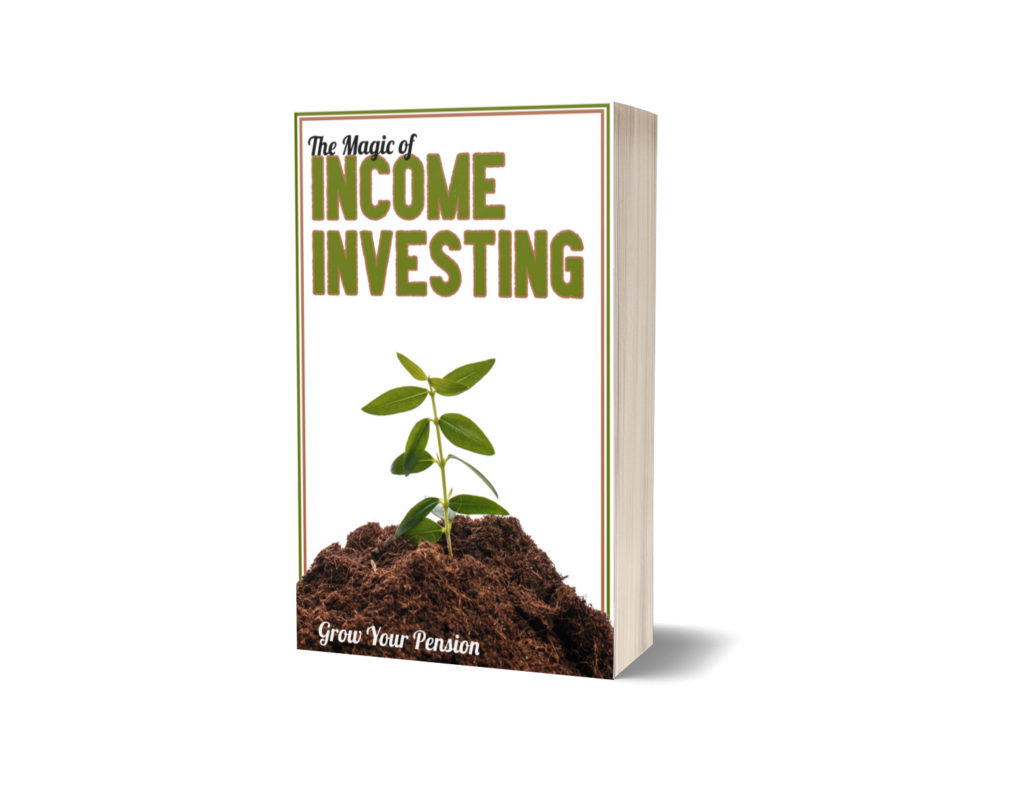
Let’s start this adventure by comparing DGI and Income Investing. The mindsets for each will differ, and you must have the proper perspective to succeed at each.
Life is Not a Game
DGI Mindset. For DGI’ers, the mindset is to invest in the best companies in the world slowly. Over time, the number of shares, the share prices, and the payment of dividends will compound until you have an extensive, income-producing portfolio. The mindset is “slow growth.”
Income Investing Mindset. Investing for Income is about trusting and buying companies over a lifetime. Income investors don’t buy assets for capital appreciation—they buy stocks and funds for the income they generate.
Once you learn and trust your funds and stocks, you can buy when others are fearful. The best income investors purchase when these stocks are down in price, sometimes by 40-50%; if you want capital appreciation with high-yield products, it’s best to buy at a discount.
Expectations are the main difference between DGI and Income Investing. For DGI’ers, they expect their shares in McDonald’s (MCD) and Starbucks (SBUX) to rise, as well as the dividend slowly.
Income investors are satisfied with the price staying flat. If you have a closed-end fund whose price was $100 in 2010, it might still cost $100 in 2021. However, if it were producing a 10% dividend yield, you’d have all your money back in 7.2 years (using the rule of 72).
Debt-Free? So, What’s Next?
Although the share price stayed at $100, how many times did it dip to $80-85? And when it did, did the income investor double down and purchase a truckload more?
That’s what is so exciting about income investing, finding great sales. Today, we are in a yieldless world. This means that the federal reserve is keeping the federal funds rate at 0%. The ten-year treasury bill is hovering around 1.5%.
Investors want yield today, so they are flocking to high-yield income products. Prices are costly in the high-yield product category.
I went shopping for preferred shares after I read the book “The Billionaire’s Secret.” There were so many preferreds yielding 18% because of the short recession we had in 2020. I was able to buy GLOP.C for $13 with a coupon of $25. The yield on the coupon is 8.5%.

So, at full price ($25), GLOP.C will yield 8.5%. When I bought at $13, my yield was almost 17%. Now that high yield is in favor again, my shares have rebounded to $25. I have capital appreciation and an excellent dividend yield. That’s the magic of income investing.
Selling Covered Calls for Passive Income
Building an income portfolio. Now that we have explored the mindset of an income investor, let’s start to develop our portfolio. As I said in “How to Start Dividend Investing 101: Find You Why,” you will need to understand the purpose of becoming an income investor.
The average person will focus most of their money on index and mutual funds. A small percentage of investors will go the DGI route. Income investors are even rarer than those two.
I had never heard of terms like high-yield, closed-end funds, or preferred shares before I began to read about them. Now, I can’t live without my high-yield products—I love them that much.
My reason for investing for income is a stable and consistent income. I look at income investing as building your retirement pension. When you invest for income, you set a target amount of revenue for your portfolio to reach. DGI’ers set a target value that they want their portfolio to reach.
In the article “Living Overseas Passively 104: Dividend Income,” I wrote that I want to pay all my expenses with my income portfolio when I go overseas. I want to use my “income pension” to pay expenses, and any other income from DGI stocks will be for luxuries.
Can You Live the Laptop Life?
Once you figure out why you want to go the income investing route, you need an income target. Always start with a small goal. If you are new to the world of income, set a reasonable goal that you can achieve in 6-12 months.
Let’s say that your electricity bill is $300/month, and you want to pay that with your income portfolio. I would first start with your phone bill that is $80/month. You want to keep yourself going for the long term. Making crazy-hard goals will deter you from your purpose.
Now that you have your goal of $80, it’s time to build. Let’s look at the building blocks of an income portfolio.
Closed-End Funds. I always start with CEFs because the income reliability is second to none. You’ll want to understand if your CEF historically trades at a premium to NAV or not. Once you look at its history, you can make great buying decisions. CEFs are my favorite high-yield product.
21 Passive Income Ideas
Mortgage REITs. I love mortgage REITs because they are the wild west cowboys of high-yield. Mortgage REITs invest in paper mortgages, not equity in homes (physical properties). They tie their profits to the difference between the price at which they borrow and lend. This makes them highly volatile. However, if you trust the company long-term, you can find great deals on mREITs. Learn your mREITs before you invest.
Preferred Shares. Preferred shares are outstanding because you know exactly what you are getting upon your purchase. If the coupon price is $25, with a yield of 7%, then you can base your buying decision on these numbers. If you see that product selling for $20, you can calculate the current yield and achieve high yield levels. Always keep a shopping list of preferreds to buy during a downturn.
Dividend ETFs. Dividend ETFs combine DGI and Income Investing because they can appreciate over time. I like to invest a good amount of income into dividend ETFs upfront (say $1500), turn on dividend reinvestment, and just let it grow (similar to DGI).

I have been using this technique for SDIV for over a year. Each month, the dividend is roughly $13. The fund continually buys shares of itself over time. When the market crashes, I can be assured that the fund will purchase many new shares at a discounted rate without my involvement.
How Would You Invest $300,000?
Business Development Companies. BDCs invest in small to medium-sized businesses. Like mREITs, they make their money on the spread between borrowing and lending. They can also acquire equity in these businesses as well. It is possible to achieve capital appreciation with BDCs over time, but I wouldn’t count on it for your investment thesis.
High-Yield Blue-Chip Stocks. Some blue-chips stocks pay an egregious amount of dividends. The chances are that their growth days are behind them, but you can buy them for the yield. I love following these stocks, and you have a slight chance of capital appreciation. Some of these blue chips are Altria (MO), Exxon-Mobil (XOM), AT&T (T), and British American Tobacco (BTI).
Income Investing is hardcore. One of the pitfalls of income investing is that it isn’t mainstream. You won’t find most of these products on investment platforms like STASH and Cash App. You’ll need to upgrade to a more complex platform like Wells Fargo or Charles Schwab.
The Value in Commodities
I use Wells Fargo for one of my income portfolios because their income calendar is second-to-none. However, I just started an M1 Finance pie that is specifically for my income portfolio.

I like M1 Finance because I can just put in several dollars to find the best deals and purchase them. This way, during a market downturn, I can just throw my money into the pie without picking individual stocks and funds.
If one stock or fund is having a bad day, I can purchase it at Wells Fargo. Income investing is all about having options. And options are why we want to generate income at all times.
My use-case. Finally, I will talk about my use case for my M1 Finance income account. You can set M1 Finance to auto-invest your dividends once your balance reaches a certain amount. I want to put this amount to $1,000.
Annuities vs. Dividends
Once my portfolio balance reaches $1,000, M1 Finance will reinvest all dividends. I can then transfer my $1,000 to my M1 Finance card and pay all my expenses for the month. Each month will be the same, and M1 Finance will continue to put my money to work.
I want to have an M1 Finance pie for myself and one for my wife. Yes, each of these portfolios will need to reach $150,000, but that is possible over time. Income portfolios tend to grow fast, especially if you double down during a downturn.
Conclusion. Wow, what an exciting topic. I love income investing—even more than DGI. Income investing is a more hands-on approach, and you see near-instant results. I love having an immediate income. Money today is worth more than money tomorrow.
The goal of life is to have excess income versus expenses. If you can achieve this consistently, you will become rich. Income investing is a way to build your income in real-time.
Diversify Your Passive Income
My wife and I achieved $650/month in passive income, with $550 of that coming from dividends. This is a tremendous amount of money, and we did this in two years. How much do you think we will have in 10 years, 20 years?
Having just $100/month of income is a fantastic feat. That is enough to buy coffee every workday of the week. That alone should be a motivating factor. Understand that you will need to build a long-term mindset.
Income investing is a lonely road. Not many people on “main street” can comprehend the technique, let alone have the discipline to build an income portfolio. While everyone is bragging about their capital gains with Tesla, you will be getting paid cold-hard cash.
Welcome to the world of income investing. Look for more comparisons between DGI and Income Investing in the future. I love them both, but my personality type just loves the hands-on nature of income investing best. Follow me on Twitter for more about dividends. Enjoy and Happy Investing.

- PDF of the Month: Don’t Gamble with Retirement 3+4 (696-Page Free PDF)
- Free PDF Downloads: Download FREE PDF books here (Twitter Link)
- Financial Mindset: Become CEO of Yourself (book)
- Retirement Planning: Don’t Gamble with Retirement 4 (Free PDF)
- Investing: The Pros and Cons of Dividend ETFs (Free PDF)
- Cryptocurrencies: The Magic of Cryptocurrencies (Free PDF)
- Real Estate: Real Estate is a Mindset (Intermediate) (Free PDF)
- Business: Retire Rich, Retire Comfortable with a Business 2 (Free PDF)
- Everything!: The Biggest Book on Passive Income Ever! (book)(Web Edition)(Art Edition)
- I bought a Kindle Oasis: Check it out Amazon
- Read My Books for Free: Free Kindle Books Schedule
- Sign up to Access our “Hidden” Free Kindle Book Schedule
- My first Children’s book: A Child’s First Book on Passive Income (book)
- Book Reviews: 54 Takeaways from 54 Books (book)
- Want to Build Passive Income from Books and Affiliate Marketing? (Learn here)
- Writing: Can Grammarly Make You a Better Writer? (direct)
- My Favorite Chromebook: The Ultimate Chromebook (direct)
- Follow us: On our Facebook Page and Join our Facebook Group
- Amazon Author Page: Check out my author page on Amazon
- Monthly Dividend Planner: Check it out on Etsy

Disclosure: I am not a financial advisor or money manager, and any knowledge is given as guidance and not direct actionable investment advice. I am an Amazon Affiliate. Please research any investment vehicles that are being considered. I wrote this article myself, and it expresses my own opinions. I am not receiving compensation for it. I have no business relationship with any company whose stock is mentioned in this article. All Right Reserved Military Family Investing


Leave a Reply