Honestly, I never really thought that taking notes was extremely important. I knew that taking notes over material was important but not the actual ART of taking notes. I did not know how much this could improve your overall thought process. “How to Take Smart Notes” by Sonke Ahrens is an extremely deep dive into the world of how we learn. He discusses how we learn, read, and write and how it is all started with how we consume information. Taking notes, therefore, is at the forefront of our educational world. More time should be spent on teaching students these important behaviors. The author bases his methodology on a German socialist named Niklas Luhmann. In a nutshell, Luhmann would take detailed notes from his readings. Then he would write down all the information on the reference and put that into a box. He would then take the note and write his own ideas and thoughts alongside the note. He would then give the note and his accompanying note a category. Next, he would put that final note into something called a slip-knot (a big box). The idea is that your notes are all inter-linking. By categorizing them, and already having your ideas taken-down, you can piece together a paper, article, or book by just connecting ideas and building a project around that.
The easily way to explain the method would be this. Imagine for a year you were keeping your receipts from various shopping ventures. Food, clothes, school, and home improvement. Most of us would just throw our receipts in a box or drawer. Let’s say we sorted by date though. That would give us a little organization. We can even say that we sorted by those 4 categories. Now say that we need to write a paper on the spending habit of our 4-person family. We would have a bunch of receipts and a few categories but no real context. We would have to go receipt by receipt and guess why the amounts varied, etc. Using the slip-knot method, we would write ideas and thoughts about the receipts alongside them. Something like, we had a party for the New Years’ so our food receipt was higher. You would then be able to formulate detailed articles based on your findings. You could find that your food and home improvement receipts we higher during the summer because of more parties and great weather to work outside. You may find that back to school time you spend more on clothes and school supplies. You may also learn if that wasn’t the case. By writing detailed notes, about your notes, and categorizing them, you will have an unlimited amount of ideas and information. The whole idea of the slip-knot is to prevent “brain-storming”. Your slip-knot, or bundle of notes and ideas, form a plethora of inter-locking ideas that already have all the information to build great material, we just need to connect the thoughts.
I have tried this method and I am sold. I am using a simple digital variant, using Google Keep, which everyone has access to for free. My five takeaways will be a little different for this article. I will review how I am using my variant of the workflow. Everyone’s workflow will be different. I read my Kindle on a tablet and have access to a digital pen. The main difference now is that I go back and write my ideas alongside the note. Then I categorize them. Let’s jump in.
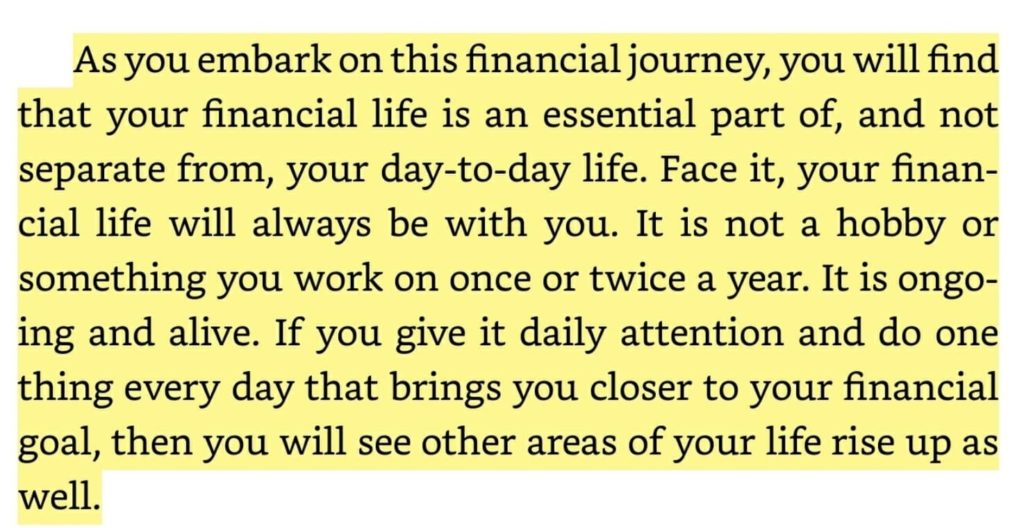
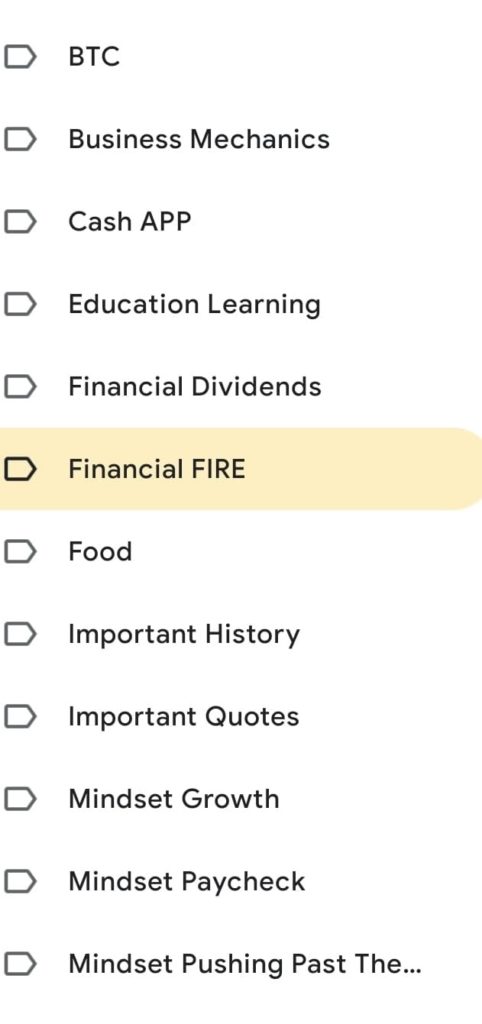
1) First I highlight notes while I am reading a book or article. I can do this by using the screen capture function on my tablet.
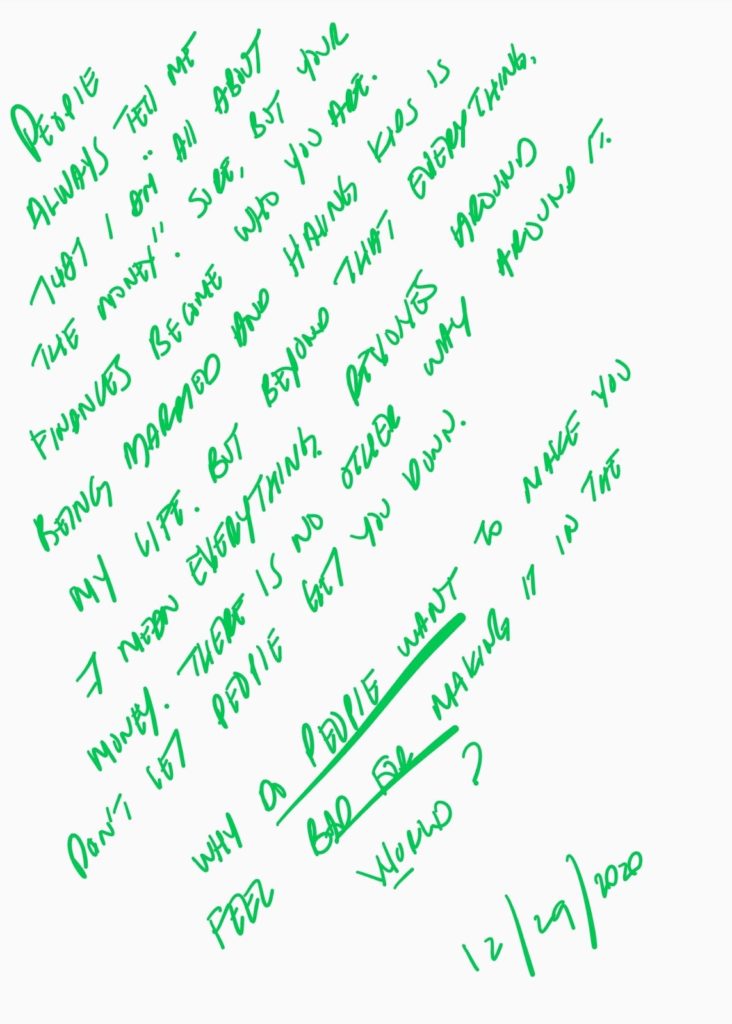
2) Now, after a month or two, I will go back and make a note about my note. I personally like to give it that much time because of the true importance of the note can formulate. You do it differently. This is just my technique.
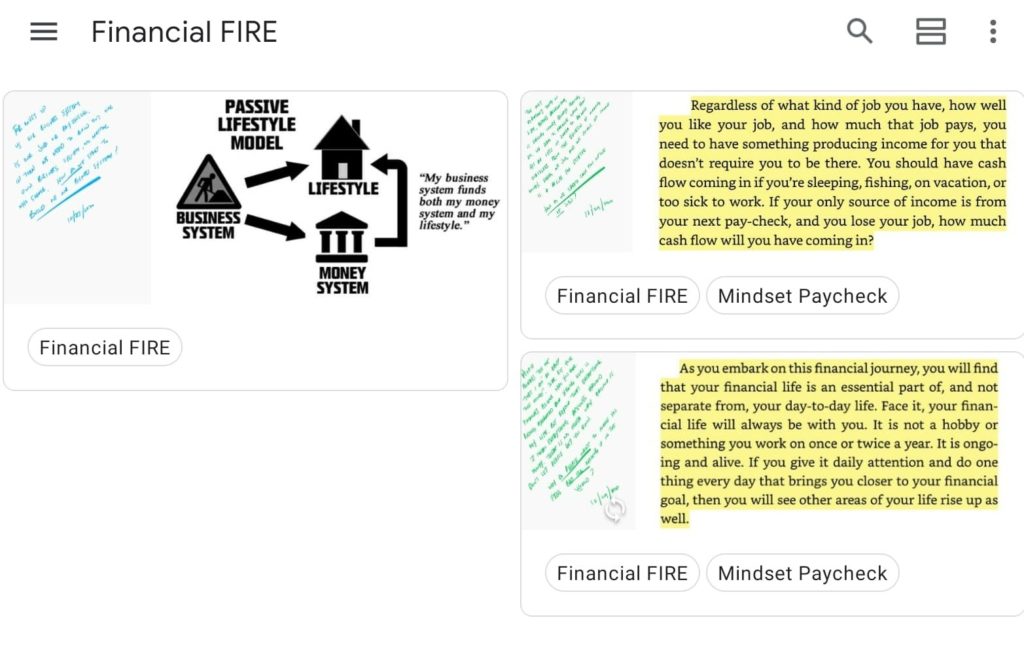
3) Then they are both captured together via the Google Keep app. I then add a category or two.
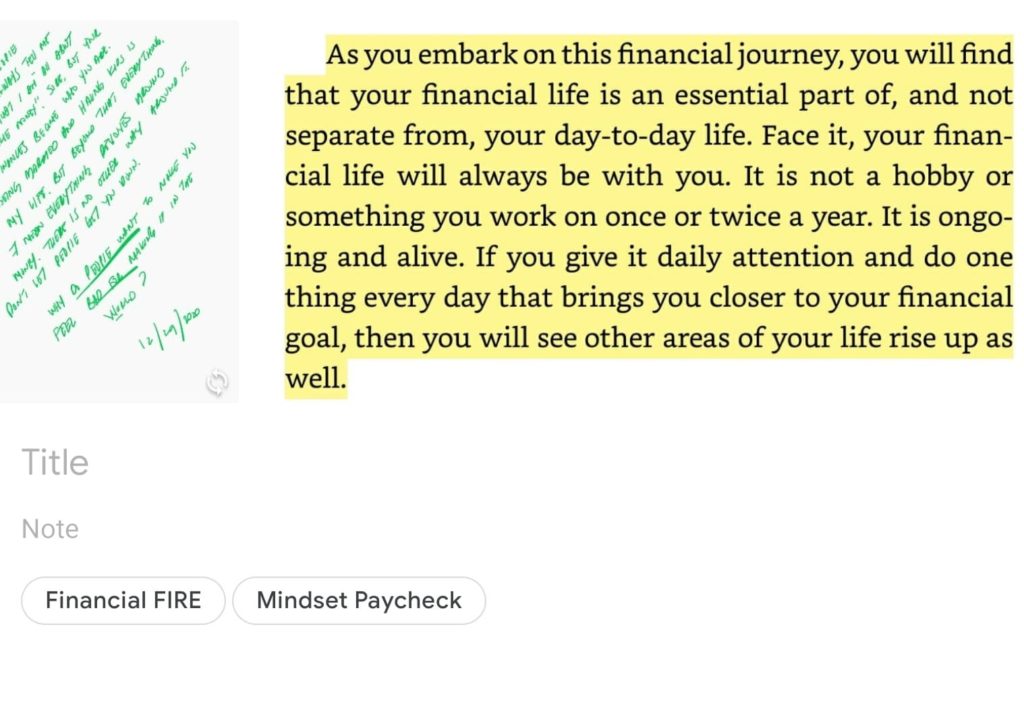
4) Now my different categories start to take form. When I need to write an article, I can pick a category and have notes and ideas already formed together.
5) Once you have a few notes and ideas, you can see how this method will lead to amazing content, workflow, and products.
The slip-knot method is the real deal. In fact, it also helps you process information better because as you are reading, you are already thinking of what idea you can take from that particular note. You are a step ahead. I read 25+ books before I read this book. So, I have at least 1,000 notes that need to have ideas attached. I am not too worried about it. As I read each night I will take 10-15 notes from my current book. Then I spend another 30 minutes going back to my old notes and forming ideas. I usually get 3-4 done. So I will never catch up. However, my slip-knot is becoming bigger and bigger each night. The idea is that the bigger the slip-knot the better. I can only imagine its size in 2-3 years. I already have 100+ articles to write before this book came along. I truly have unlimited articles to write now. Sometimes the only problem is that your thoughts will become super-deep with this much material. I have to try to keep my articles in a mainstream context just because I have too much information that I can put into them. If you are serious about content creation, this is the best method to form a never-ending supply of ideas and thoughts. This will then give you enough content to last a lifetime. I highly recommend “How to Take Smart Notes” for the content creators, students, and educators of the world. Plus anyone else who wants to get a leg up on life.

Get Your Free eBook:
Follow us on our Facebook Page:
https://www.facebook.com/kingmarine1775
Join our Facebook group at:
https://www.facebook.com/groups/231490384820780
Follow us on Pinterest at:
https://www.pinterest.com/kingmarine/military-family-investing/Disclosure: I am not a financial advisor or money manager, and any knowledge is given as guidance and not direct actionable investment advice. I am an Amazon Affiliate. Please research any investment vehicles that are being considered. I wrote this article myself, and it expresses my own opinions. I am not receiving compensation for it. I have no business relationship with any company whose stock is mentioned in this article.


Leave a Reply